
Wireless fuel monitoring for oilfield units in the rainforest
How an energy company in Ecuador automated fuel accounting on mobile well-testing units with battery-powered wireless sensors and a solar-powered gateway.
Integrated energy solutions in 27 countries
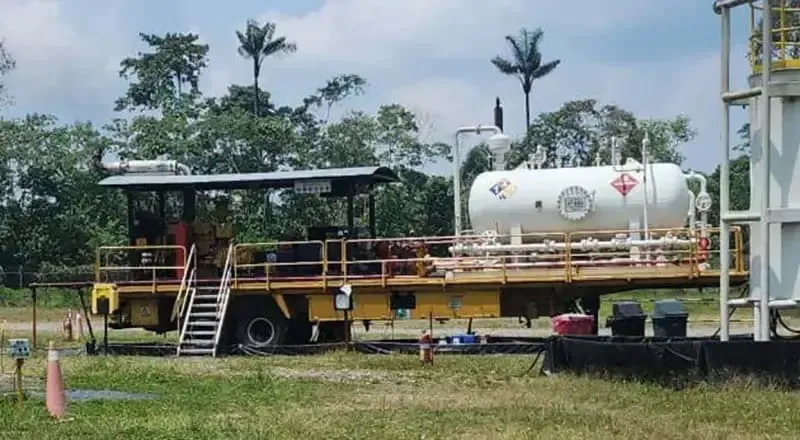
The Ecuador-based company develops technology and equipment for the oil and gas, mining and power industries, including systems to monitor and optimise oil wells. It uses mobile testing units (MTUs) to assess reserves and produce oil from wells in complex formations.
- 1,000 employees
- 30 years in the market
- 250 MTU units
Manual tank checks, norm-based fuel costs
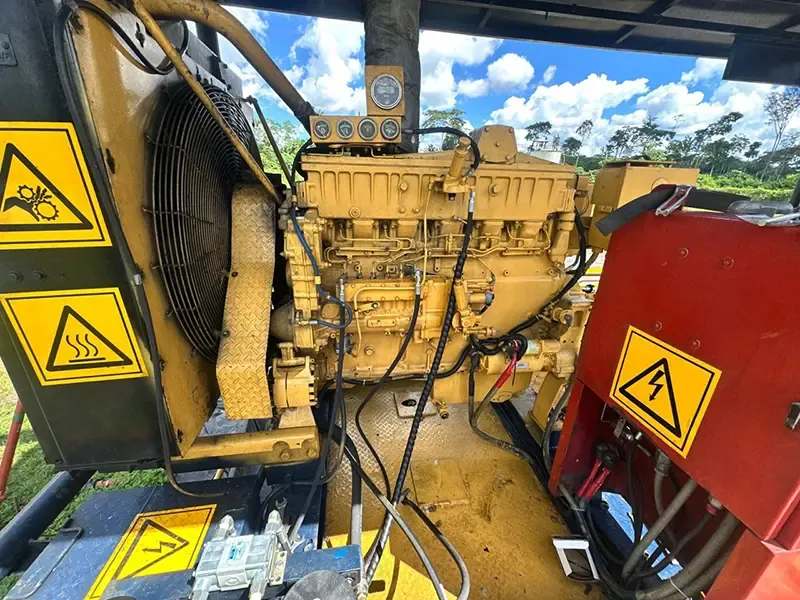
Each trailer-mounted MTU carries a pump, a separator, valves, sensors and a CAT 3406C engine (14.7 L, 347 kW) fed from a 400–800 L built-in tank, topped up from a 3,000 L external tank 3 m tall. All tanks were checked by hand — staff climbing four-metre tanks — and engine consumption wasn’t measured; fuel costs came from norms and were typed into accounting by hand.
The company needed accurate tank levels, online engine consumption and automatic data export to its accounting systems.
No cables, no external power
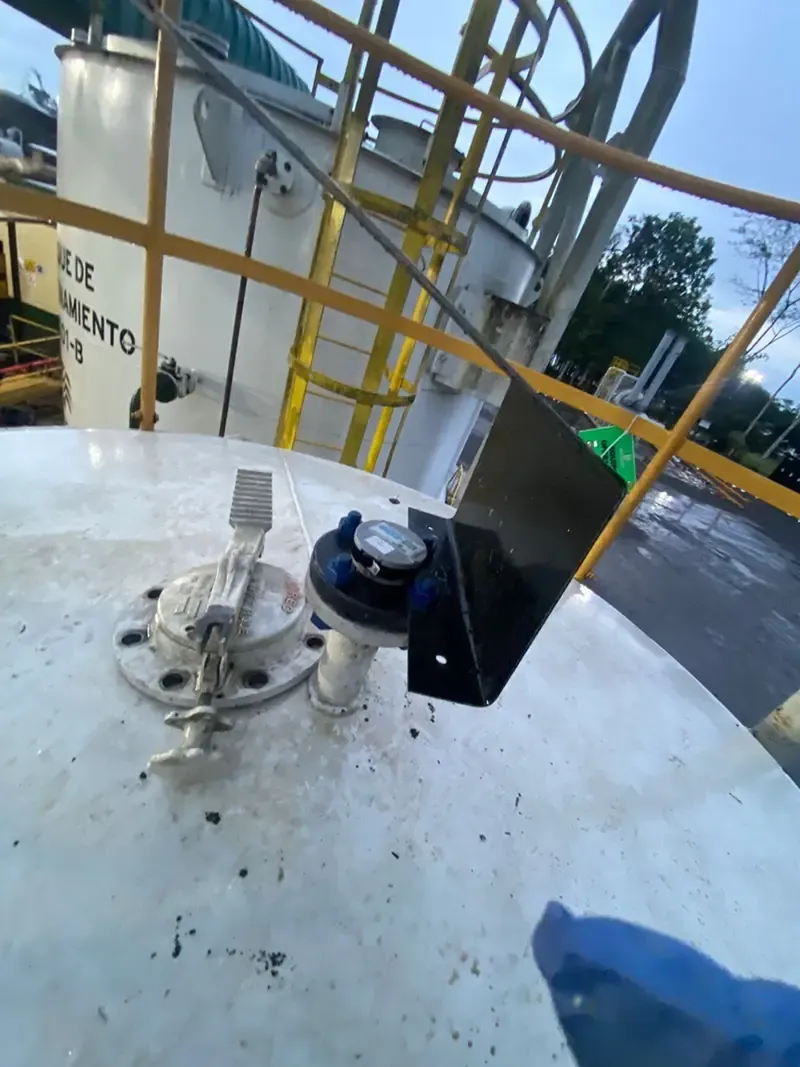
DUT-E S7 wireless fuel level sensors sit in the main tank and the day tank, and a DFM D S7 flow meter measures the engine’s fuel line. They run on built-in batteries and transmit over Bluetooth up to 50 m to a CANUp gateway powered by a solar panel — no power or data cables on site.
The level sensors ship in 1,000 mm sections assembled on site to up to 3,000 mm, which simplifies transport to remote rainforest locations. Consumption and level charts are available in the cloud, with API export to accounting and management systems.
Refuelling and fuel accounting are fully automated: reports take minutes instead of dozens of hours of manual work each month, and nobody has to climb the tanks. The system runs fully autonomously on batteries and solar power. It is installed on 12 MTUs, with the remaining 238 units planned.
Task → Solution → Result
Manual, norm-based fuel data
Hand-checked tanks and norm-based fuel costs on 250 remote mobile units.
Wireless DUT-E S7 + DFM D S7 + solar CANUp
Battery-powered sensors, solar gateway, cloud reports with API export.
100% automated fuel accounting
Dozens of hours saved monthly; rollout to 238 more units planned.
Less manual work means fewer errors. Personnel no longer need to climb four-meter-high fuel tanks – fuel data is collected automatically, safely, and accurately. … Reliability in real-world conditions. The solution is designed for continuous operation in harsh environments and has proven its effectiveness when equipment is moved between oil production sites.
Business analyst · Energy company, Ecuador
Want product info and guidance from our experts?
Tell us about your fleet and we'll recommend the right measurement setup.