
Catch fuel theft before it shows up on the invoice.
Direct-tank sensors and contactless CAN readers that turn every refuel, drain, and consumption event into data your dispatcher can see — across trucks, marine, gensets, mining, and rail.
What you have today
Factory fuel gauges miss small thefts, drift with temperature, and can't tell a refill from a slosh. By the month-end fuel reconciliation, the variance is already baked into your costs and you can't tell where it went.
What we add
A capacitive sensor in the tank or a contactless CAN reader on the harness. Either way, level, volume, temperature, and event detection stream into your existing telematics platform — accurate to ±1%, timestamped to the second.
Every event in the tank, visible on one timeline.
Once installed, fuel level streams to your dashboard at a configurable interval. Refill events, drain events, and consumption rates are detected automatically and surfaced for review.
- Consumption curve — natural draw-down during operation, smoothed against tank shape and temperature.
- Refill spikes — exact volume and timestamp, cross-checked against fuel-card transactions.
- Drain events — sudden drop outside operating hours triggers an alert with location, volume, and driver-on-shift.
Pick the approach that fits your fleet and your budget.
Most fleets use both: direct sensors on high-value or older equipment, contactless CAN reading on the modern fleet for fast rollout.
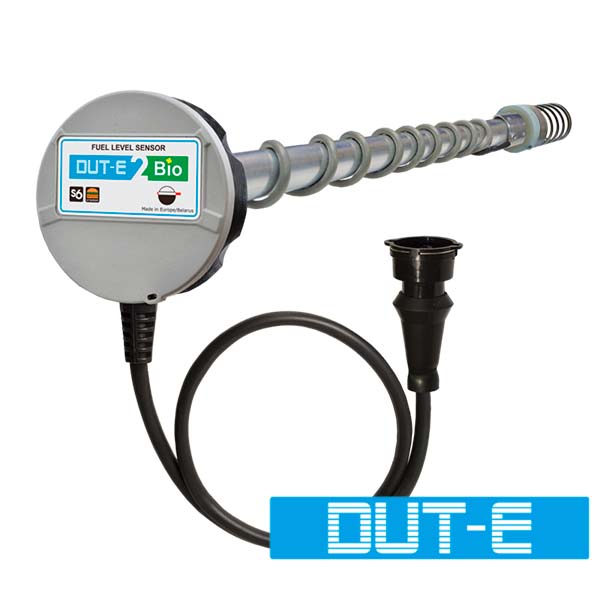
| Accuracy | ±1% |
| Install time | 2–4 hours per tank |
| Hardware cost | Medium |
| Suitable for | Any tank shape · any vehicle age |
| Independent of | ECU, CAN bus, ambient temperature |
| Best when | Theft detection or fuel-quality control matters |
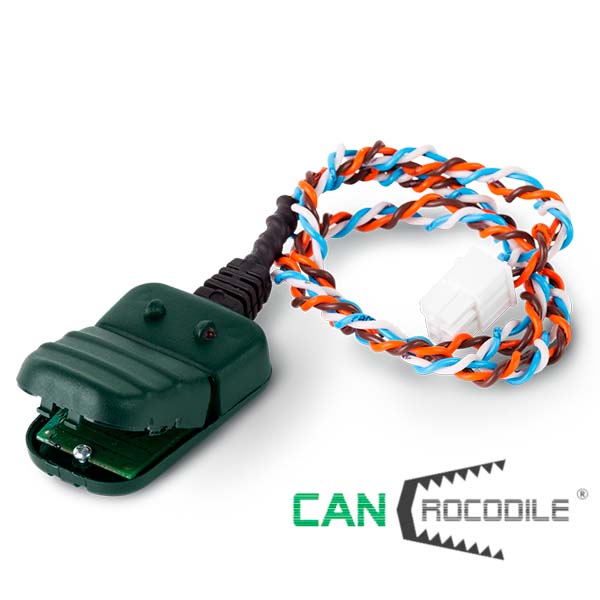
| Accuracy | ±3–5% |
| Install time | 30 minutes per vehicle |
| Hardware cost | Low |
| Suitable for | Vehicles with ECU and CAN/J1708 bus |
| Bonus data | RPM, oil pressure, engine hours, FMS |
| Best when | Speed of rollout and low cost matter most |
Drops into your existing telematics stack.
Wagencontrol hardware speaks SAE J1939, FMS, RS-485 and Modbus — so the data flows through any GPS platform you already use, or through a partner integrator.
Fleets running this exact setup.
Vic Florido eliminated drain events on his road-building fleet after installing DUT-E sensors with refill alerting.
DUT-E sensors on stationary genset tanks alert operators before fuel runs out — preventing power loss in conflict zones.
DUT-E 2Bio differential fuel level sensors on truck tanker cisterns gave the operator a precise consumption baseline.
Describe your fleet. Get a working setup in 30 seconds.
Our advisor knows the entire product line - every variant, every protocol, every tank table from 600+ OEMs. Try the recommendation before you talk to an engineer.