
Your trucks burn 5,000 litres a month. How much of it reaches the engine?
A typical truck loses 100–300 L a month, siphoned at night parking or filled into a canister at the pump. Standard CAN fuel data has a 7–10% error, so it never shows up. Our sensors see every litre filled and every litre drained, with time, place and amount.
Why you don't see it today
Fuel cards show what was paid, not what went into the tank. The factory fuel gauge on CAN is accurate to 7–10%. On a 5,000 L month that is 350–500 L of noise, and a 150 L drain simply disappears in it. Police reports rarely bring the fuel back.
What changes with Wagencontrol
A calibrated fuel level sensor goes in the tank (±1%), and on machinery a flow meter is added on the engine. Every refill is matched to its receipt, and every drop while the engine is off triggers an alert. The data goes into the telematics system you already use, or to a standalone unit if you have none.
What does unaccounted fuel cost your fleet?
Enter your own numbers. Even a 2% loss on a 20-truck fleet adds up to tens of thousands of euros a year, walking away in canisters.
Saving just 100 L per truck per month is about €200 per truck. The sensor usually pays for itself within a few months.
Get a quote for my fleet →Every refill and every drain, with time, place and litres.
Fuel level streams to your platform continuously. Refills and drains are detected and flagged automatically.
- Fuel level curve: normal consumption on the road, without CAN noise.
- Refill vs receipt: paid for 450 L but only 412 L reached the tank? You see the 38 L gap.
- Drain alert: the level drops while the engine is off, and you get an instant alert with GPS location and volume.
Trucks or machinery? Choose your starting point.
Both use the same principle: measure the fuel directly instead of estimating it from CAN.
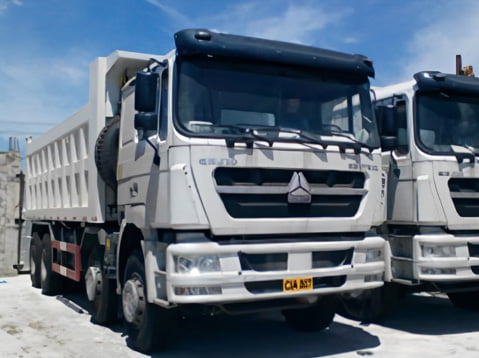
| Stops | Night siphoning at parking · canister filling at the pump · fuel-card misuse |
| Accuracy | ±1% of tank volume |
| Works with | Your existing GPS tracker / telematics |
| No telematics? | DUT-E GSM works standalone |
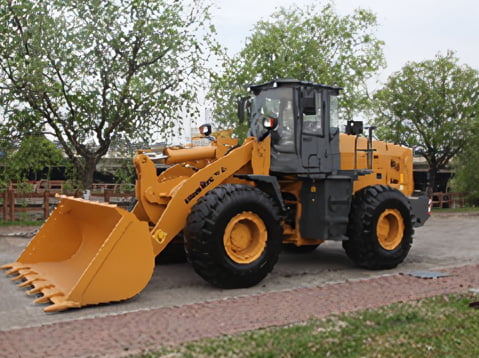
| Stops | Weekend draining on site · refuelling "on paper only" · inflated engine hours |
| Measures | Litres actually burned by the engine + litres in the tank |
| Machines | Excavators · rollers · cranes · loaders · dozers |
| Works with | Your existing GPS tracker / telematics |
Tell us your telematics provider. We'll do the rest.
We integrate with any system. Our sensors connect to the tracker you already have, and the data appears in the platform you already use. No tracker at all? DUT-E GSM sends data on its own.
Fuel theft stopped, not just reported.
A road-building contractor stopped fuel theft across 25 machines and recovered the whole investment in less than three weeks.
Integration partner Starcom Systems halved fuel-drain volumes and cut cargo insurance costs by 60%.
Fuel tankers and site storage tanks brought under accurate control with DUT-E GSM sensors.
Questions fleet owners ask
We already have GPS tracking. Why add a sensor?
Most trackers read the factory fuel gauge over CAN. That gauge is built to show the driver roughly how much is left, not to measure, and its error is 7–10%. A 100–200 L drain fits inside that error. A calibrated DUT-E sensor is accurate to ±1%, so every drain and every short refill becomes visible.
Which telematics systems do you work with?
Practically any: Wialon, Webfleet, Geotab, Navixy, Teltonika-based platforms and most local providers in Czechia, Slovakia, Austria and Slovenia. Tell us which one you use and we take care of the configuration.
We have no telematics at all. What then?
Then DUT-E GSM: a fuel level sensor with built-in GPS and GSM in one device. It sends data on its own, with no separate tracker needed.
Does it work on construction machinery without fuel cards?
Yes. On machinery we add a DFM flow meter that counts the litres the engine actually burns. Compare it with what was poured in from the bowser, and the gap is obvious.
How quickly do we learn about a drain?
As soon as the next data packet reaches the platform, typically within minutes. The alert shows the vehicle, location, time and the litres drained.
Tell us your telematics provider
We'll come back within one business day with a setup and a price for your fleet.