
DFM
Differential fuel flow meter installed directly in the engine fuel line. Direct measurement of fuel consumption to ±1% per chamber, with tamper-evident counters and a built-in battery that records data for up to 3 years even when external power is cut.
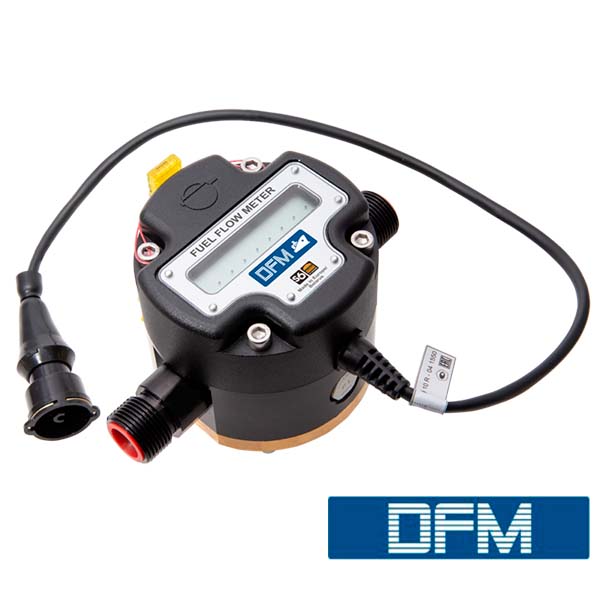
Two chambers measure supply and return — the difference is the truth.
Modern diesel engines use a return line — fuel that doesn't combust comes back to the tank. A single meter on the supply line over-counts. DFM-D measures both lines simultaneously; the difference is actual consumption.
- Cut into the fuel line at the chosen position (before or after the low-pressure pump) and install DFM with the supplied mounting kit.
- Connect three wires — power, ground, and signal — to your existing telematics gateway via RS-485, frequency, or CAN J1939.
- Auto-calibrate at install — DFM ships pre-calibrated; field calibration is only needed for unusual fuel grades.
- Stream data — instant flow, totals, operating mode hours, CO₂ emissions, and 30+ more parameters into your fleet platform.
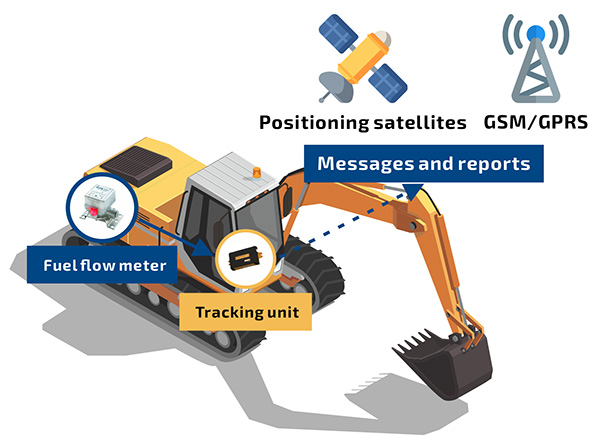
DFM installed inline in a typical diesel engine fuel line
Choose the variant that matches your setup.
All variants share the same chamber-displacement measurement core and ±1% accuracy. The difference is the output interface and display option.
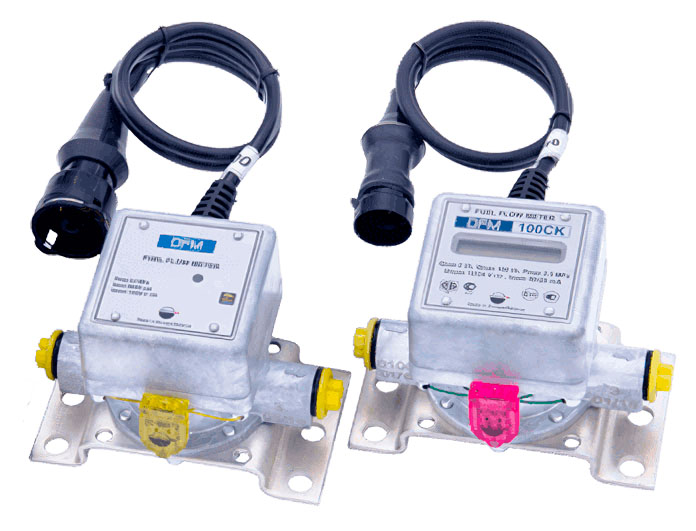
DFM (cable output)
Standard variant with output cable. Connects to any telematics gateway via RS-485 or frequency signal. Best choice for fleets with an existing GPS/telematics setup.
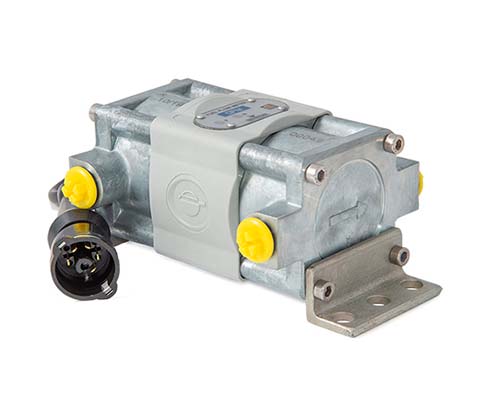
DFM-D Differential
Two-chamber unit that measures supply and return lines simultaneously. The difference is actual consumption — eliminates over-counting on modern EURO/TIER 3–5 engines with a return line.
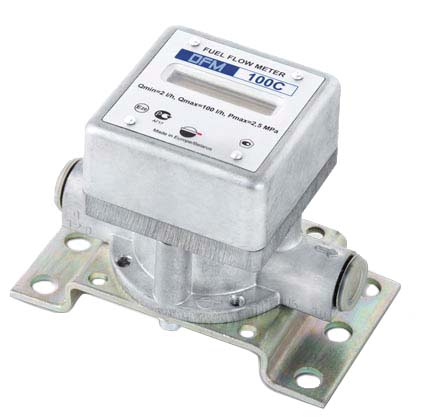
DFM Autonomous
Standalone variant with built-in LCD display and lithium battery. Records fuel data for up to 3 years without external power. Ideal for machines without a telematics unit.
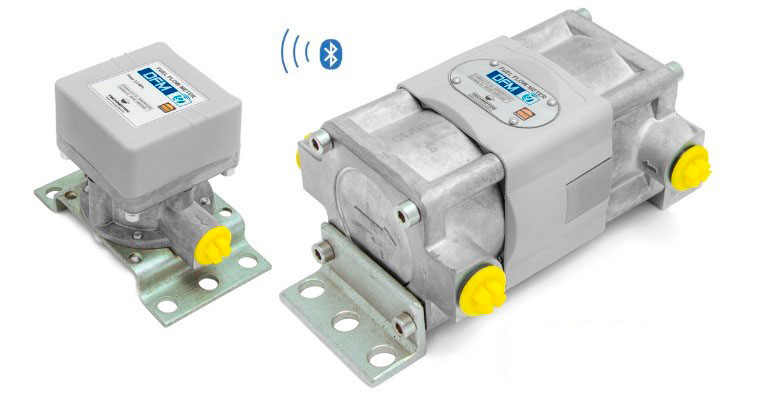
DFM S7 Wireless
Wireless variant with BLE connectivity and internal battery. Streams data to telematics units, smartphones, or BLE-enabled displays without cable runs. Ideal for retrofits.
Audit-grade fuel data. Tamper-proof.
Magnetic interference and airflow tampering events are logged internally with timestamps. Data persists during external power loss and is transmitted to the fleet platform on restore.
Internal lithium battery keeps the clock and counters running even when vehicle power is cut. Records are never lost during maintenance, battery changes, or deliberate disconnection.
Installed directly in the fuel line — no tank drilling, no floats. The chamber-displacement principle measures every drop that passes through with ±1% accuracy.
Continuously classifies engine state as idle, optimal, or overload and reports hours in each mode. Enables real fuel-efficiency analysis, not just totals.
Full technical parameters.
Industries using this product.



Everything an installer needs.
Need 10+ units? Skip the e-shop.
A Wagencontrol engineer reviews your engine list, recommends the right DFM model, and replies with a written quote — usually within 4 hours on EU business days.