
Settle the bunker bill at the engine, not the dock.
Per-engine flow measurement and bunker tank monitoring for vessels, port equipment, and bunker barges. Every liter that enters the engine on your vessel record - accurate to ±0.5%, defensible against dock-side disputes.
What you have today
Dock-side meters can be disputed and rarely match your own records. Tank dipping is best effort. By the time consumption per nautical mile looks wrong, the supplier has already closed the bunker records.
What we add
A DFM meter on each engine supply line, plus return-line setup where needed, measures real engine consumption at ±0.5%. An optional DUT-E bunker sensor reconciles delivered against burned fuel with timestamps.
Every voyage, every engine, every liter - on one timeline.
Flow data streams while engines are running. Voyages are segmented by departure and arrival; consumption is summarized per voyage, per engine, and per nautical mile.
- Underway profile - flow vs time shows idle, cruising, and high-load maneuvering in one view.
- Bunker reconciliation - delivered volume versus burned volume, with variance thresholds.
- Anomaly events - sudden drops, return-over-supply states, and non-bunkering tank changes trigger alerts.
Engine-only tracking or full bunker-to-engine reconciliation.
Many operators start with engine-side DFM for operational control and reporting. Fleets with recurring bunker disputes add DUT-E in bunker tanks to close the loop end-to-end.
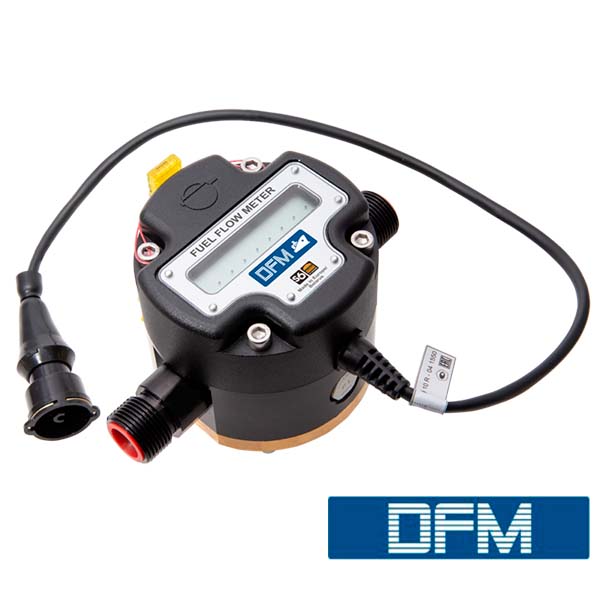
| Accuracy | ±0.5% |
| Detects | Flow rate · totaliser · engine on/off · idle vs underway |
| Install | 4-6 hours per engine |
| Hardware cost | ~€1,200 per engine |
| Best when | Operational awareness · EU MRV/IMO reporting · single vessel operations |
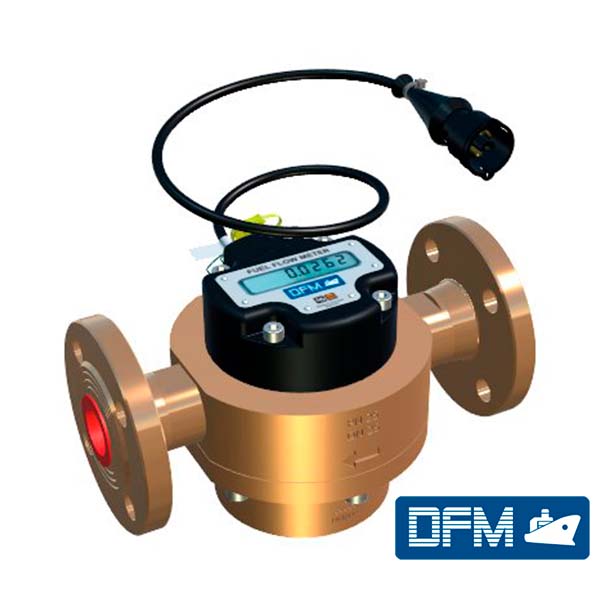
| Accuracy | ±0.5% / ±1% |
| Detects | Everything above plus delivered-vs-burned variance and bunker alerts |
| Install | 1 day per vessel (engines + tank + cabling) |
| Hardware cost | ~€2,200 per vessel |
| Best when | Bunker disputes · multi-vessel fleets · port operators · bunker barges |
Flow-first marine telemetry in your existing vessel stack.
Per-engine DFM meters and optional bunker-level sensing feed a single onboard gateway and your preferred platform for voyage reporting and reconciliation.
Marine operators using this setup in production.
DFM flow meters on bunker vessels gave the port a precise consumption baseline and ended supplier fuel-bill arguments.
Per-engine flow data exposed high-load patterns; route and maneuver adjustments reduced fuel per voyage within two months.
Flow data feeds MRV workflows directly, reducing manual entry and cross-checking against bunker receipts.
Describe your fleet. Get a working setup in 30 seconds.
Our advisor knows the entire product line - every variant, every protocol, every tank table from 600+ OEMs. Try the recommendation before you talk to an engineer.