
Excavators, rollers, cranes: know where every litre goes.
Machinery has no fuel cards. It is refuelled from a bowser, stands on open sites over the weekend and runs on "engine hours" nobody can check. A DFM flow meter counts the litres the engine actually burns, and a DUT-E sensor sees every refill and every drain.
Why machinery is the easiest target
No fuel card and no receipt, just a bowser and a paper log. Machines stand on open sites at night and over weekends. The factory fuel gauge, if there is one, has a 7–10% error, and "engine hours" say nothing about how much fuel really went into the engine.
What you get
DFM counts the litres burned by the engine, and DUT-E measures what is in the tank. Litres poured in from the bowser minus litres burned shows what disappeared. A level drop over the weekend triggers an alert with location, time and volume.
What does unaccounted fuel cost your fleet?
Enter your own numbers. Even a 2% loss on a 20-truck fleet adds up to tens of thousands of euros a year, walking away in canisters.
Machines on open sites lose more than trucks: there are no fuel cards and no receipts, only a bowser and a paper log.
Get a quote for my fleet →Every refill and every drain, with time, place and litres.
On site the tank only goes down while the engine runs. Any drop over a weekend is immediately visible.
- Working days: the level falls only while the engine runs. DFM confirms the litres actually burned.
- Bowser refills: each refill is matched against the bowser log, so litres written down but never poured in show up.
- Weekend drains: a level drop on Saturday night with the engine off triggers an alert with location and litres.
A tank sensor against theft. Add a flow meter for full control.
Start with DUT-E to stop drains. Add DFM where you also want to know the real consumption of each machine.
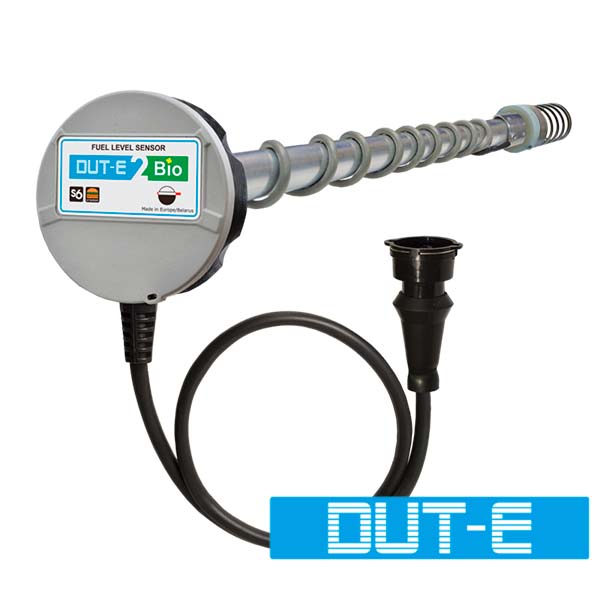
| Detects | Drains · short refills · weekend activity |
| Accuracy | ±1% of tank volume |
| Works with | Your existing GPS tracker / telematics, or DUT-E GSM standalone |
| Best when | Drains are the main problem |
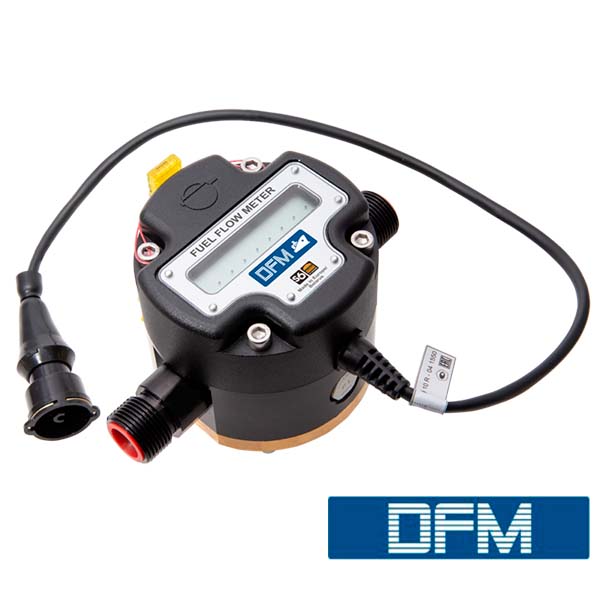
| Detects | Everything in way 1 + real consumption per hour and per job |
| Accuracy | ±1% tank · DFM measures every litre burned |
| Works with | Your existing GPS tracker / telematics, or DUT-E GSM standalone |
| Best when | You also bill by machine hours, or suspect inflated engine hours |
Tell us your telematics provider. We'll do the rest.
We integrate with any system. Our sensors connect to the tracker you already have, and the data appears in the platform you already use. No tracker at all? DUT-E GSM sends data on its own.
Fuel theft stopped, not just reported.
A road-building contractor stopped fuel theft across 25 machines and recovered the whole investment in less than three weeks.
Fuel tankers and site storage tanks brought under accurate control with DUT-E GSM sensors.
Integration partner Starcom Systems halved fuel-drain volumes and cut cargo insurance costs by 60%.
Questions site and fleet managers ask
We already have GPS tracking. Why add a sensor?
Most trackers read the factory fuel gauge over CAN. That gauge is built to show the driver roughly how much is left, not to measure, and its error is 7–10%. A 100–200 L drain fits inside that error. A calibrated DUT-E sensor is accurate to ±1%, so every drain and every short refill becomes visible.
Why not just use engine hours?
Engine hours show that the engine ran, not how much fuel it burned. With DFM you know the actual litres per hour and per job, so a machine that "used" 400 L but burned 300 L stands out immediately.
We refuel from our own bowser. Can you check that too?
Yes. Every refill is measured in the machine tank, so you can compare it with the bowser log. Litres written down but never poured in become visible. A DUT-E sensor in the bowser tank closes the loop.
Our machines move between sites. Is that a problem?
No. Location comes from your tracker or the built-in GPS of DUT-E GSM, so every alert shows the site where it happened.
Which telematics systems do you work with?
Practically any: Wialon, Webfleet, Geotab, Navixy, Teltonika-based platforms and most local providers in Czechia, Slovakia, Austria and Slovenia. Tell us which one you use and we take care of the configuration.
We have no telematics at all. What then?
Then DUT-E GSM: a fuel level sensor with built-in GPS and GSM in one device. It sends data on its own, with no separate tracker needed.
Tell us your telematics provider
We'll come back within one business day with a setup and a price for your fleet.